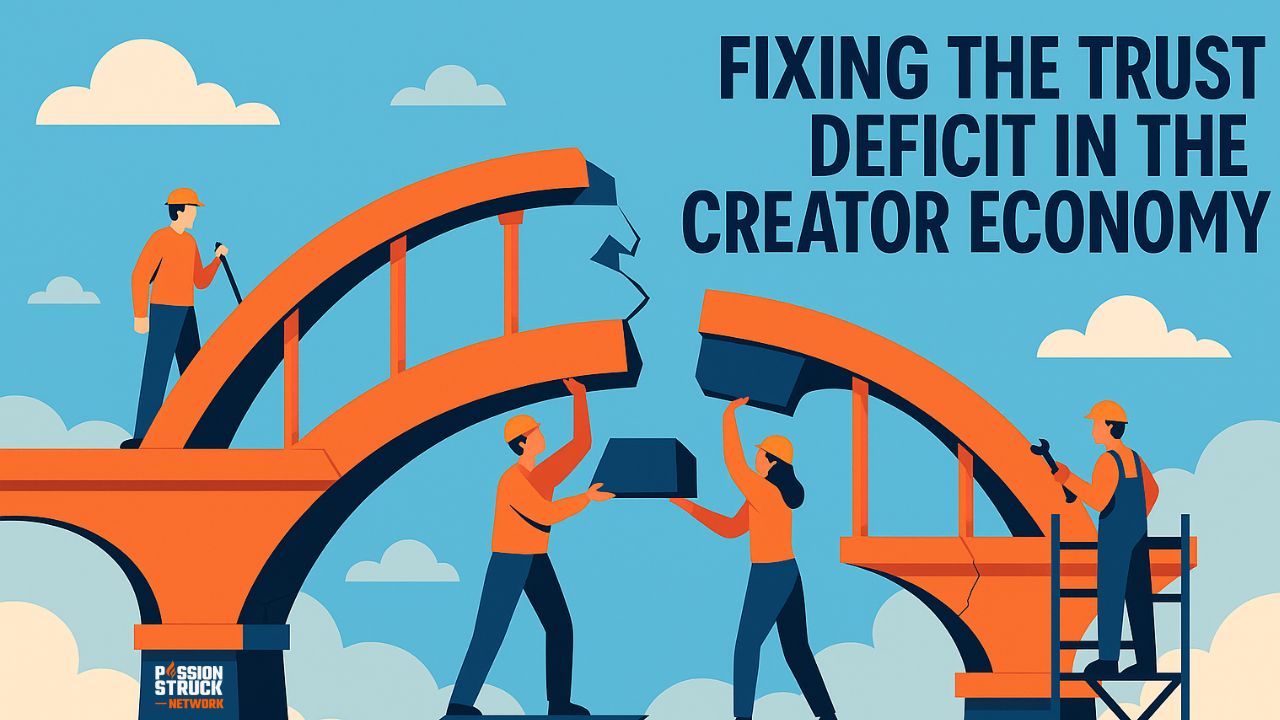
The creator economy has never been bigger or more under scrutiny. Audiences are consuming more content than ever, but they’re also more skeptical. The likes and follows are still there, but the loyalty is fading. People are asking harder questions about who they listen to, why they should trust them, and whether the connection is real.
This trust deficit is one of the most urgent challenges facing creators today. And solving it isn’t just about keeping audiences engaged, it’s about restoring meaning to the creator-audience relationship.
The Growing Global Trust Deficit Disorder
For years, the creator economy was powered by relatability. Creators were seen as “just like us,” regular people who built an audience by sharing authentic stories. That intimacy was its magic. But as the industry has matured, it’s also become more commercialized.
Sponsored posts, affiliate links, and product placements are now standard. There’s nothing inherently wrong with monetization; creators deserve to be paid for their work, but when every recommendation sounds like an ad, audiences start to question motives. This results in lower trust in institutions.
Recent studies indicate a decline in trust in influencers and an increase in skepticism about whether creators genuinely believe in the products or ideas they promote. Audiences are no longer satisfied with curated perfection; they want transparency, context, and honesty.
Why the Trust Deficit Matters
Trust isn’t a nice-to-have; it’s the backbone of the creator economy. A trusted creator can launch a product, start a movement, or rally their community to action. A creator caught in a trust deficit might still go viral, but the engagement is hollow and short-lived.
Researchers have long argued that trust acts as a multiplier: it reduces friction, deepens loyalty, and strengthens communities. Without trust, creators are stuck in a cycle of chasing views, clicks, and temporary attention, all while burning out.
Why “Authenticity” Alone Isn’t the Solution
The most common advice given to fix the trust deficit is “just be authentic.” But authenticity on its own can miss the mark. Oversharing doesn’t necessarily build trust, and even authentic creators can lose credibility if their audience doesn’t feel that their content is relevant, intentional, and aligned with shared values.
Audiences want more than raw honesty. They want to matter, the feeling that they are seen, valued, and included in the journey. This is the missing piece in repairing the trust deficit.
Trust is more than a feel-good concept; it’s the foundation of a sustainable creator business. A trusted creator can launch a product, sell out an event, or start a movement. A distrusted creator might still go viral, but the engagement is hollow and fleeting.
Economists have long argued that trust acts as a multiplier, lowering friction, increasing loyalty, and making communities more resilient. In the creator economy, it works the same way. When audiences trust a creator, they lean in. They invest not just their attention, but their time, money, and advocacy.

How to Fix the Trust Deficit
1. Be Transparent About Your “Why”
When you partner with a brand or cover a topic, explain why. If it aligns with your mission, let your audience see the thinking behind it. Transparency converts skepticism into respect.
2. Build Two-Way Trust
Trust isn’t built in a broadcast — it’s built in conversation. Engage in real dialogue with your audience. Ask questions. Invite feedback. Show that you are listening and that their presence matters.
3. Create Meaningful Media
The fastest way to close the trust deficit is to give your audience something that truly resonates. Move beyond clickbait and quick hits. Offer insight, context, and transformation. Make your content worth their time.
4. Deliver Consistency
Reliability is underrated. Posting when you say you will, following through on promises, and being consistent in your values all signal respect for your audience.
Why This Matters for the Creator Economy
If trust is the currency of the creator economy, we’re in the middle of a correction. The future won’t be shaped by who shouts the loudest, but by who builds the deepest relationships.
At Passion Struck Network, we believe the way forward is clear: elevate voices that matter, champion transparency, and amplify creators who prioritize trust and significance over vanity metrics.
The trust deficit can be fixed, but only if we treat trust as a strategy, not a byproduct. Audiences are ready to believe again. The question is whether creators will rise to meet them.